
The Problem with Hitting the Ground Running
Make it stand out
Whatever it is, the way you tell your story online can make all the difference.
Imagine this scenario.
Your company announces a dramatic reorganization. People you have worked with for years are now on different teams, or worse, they no longer even work with the company. Leadership is empathetic and sincere. They talk about changing circumstances and forces beyond their control. They paint a bright picture for the future and ask us all to hit the ground running. Rationally, it makes sense.
Emotionally, though? Total shock. What just happened? What does this even mean for you?
Many of us have lived this scenario. Here's what the next day looked like for me.
I joined a project development call. Everyone looked like they were doing their best to hit the ground running, but I could still see the shell shock on their faces. We did a quick round of intros for the new-to-the-call folks, and then this happened:
One person introduced himself. Then another person said, “Oh, hey. Nice to meet you. I think I'm your new manager.”
“Oh yeah,” he responded. “Nice to meet you.”
And then we kept going. The call continued as usual.
But I was stuck. Two people had just met as manager and employee by accident in the middle of a completely unrelated project call. Is that what hitting the ground looks like?
I know business doesn’t stop because we have feelings, but can we teach people how to walk before expecting them to run?
Processing Change is Part of the Work
Knowing what changed and processing what it means to you are two very different things. Leaders may have been perfectly clear about the facts of a change, but clarity doesn't erase the human reaction.
The American Psychological Association found that employees experiencing organizational change were more than twice as likely to report chronic work stress as those who weren't—55% compared with 22%.
APA: Change at Work Linked to Employee Stress, Distrust and Intent to Quit
Humans have big, messy, complicated emotions, even if they don't want them. But pretending humans are robots won't make those emotions go away. Someone can intellectually understand and even agree with a change before they're emotionally ready for it. That's why organizations can't ignore the emotional side. Simply acknowledging that those emotions exist and giving people opportunities to process them can help people get their feet under them before we ask them to start walking forward.
Once people have had a chance to process, they can start figuring out how to move forward. But even this part isn't running yet. It's more like learning where to step:
What does this mean for my role?
What does my team need to do differently?
What's still the same?
Who do I need to build a new relationship with?
What might fall through the cracks?
What do I need from my manager?
What does my manager need from me?
Don’t mistake this for resistance, but these questions, these steps, are simply an individual trying to figure out: What do I do now?
Most people are already puzzling through these questions in their heads. Leaders can create opportunities to bring those questions out into the open and help people figure out what the change means for them and their work.
Urgency Doesn't Eliminate the Need for Transitions
Ideally, this work starts before the announcement, but we know change doesn't always happen under ideal circumstances.
Urgency can dictate how much time you have to work with your team, but it doesn't eliminate the need to help people transition. Helping people transition means engaging them in the change, not just telling them about it.
McKinsey found that when transformations failed to engage either frontline employees or line managers, just 3% of respondents said the transformation was successful.
Read McKinsey's research on successful organizational transformations
So how do you engage people in the change when the business needs to keep moving? Start with the time you actually have. Then decide what your people need most from you in that time.
Get curious. People may know the facts, but you don't know how they're feeling about them. Ask questions to understand what's weighing on them. What are they most worried about? What still feels unclear? What questions are they afraid to ask? And if you don't know the answer, it's okay to admit that, too.
Create connection. People don't process change in a bubble. Ironically, we figure out what we think by talking to others. As a leader, it's your job to make sure there are opportunities for those conversations to happen beyond the next project meeting.
Invite courageous collaboration. The people closest to the work may see things you can't. Give them room to tell you when something doesn't make sense or when they see a problem you might have missed. You don't have to change every decision, but you do need to be willing to hear what they see.
Before You Ask People to Run
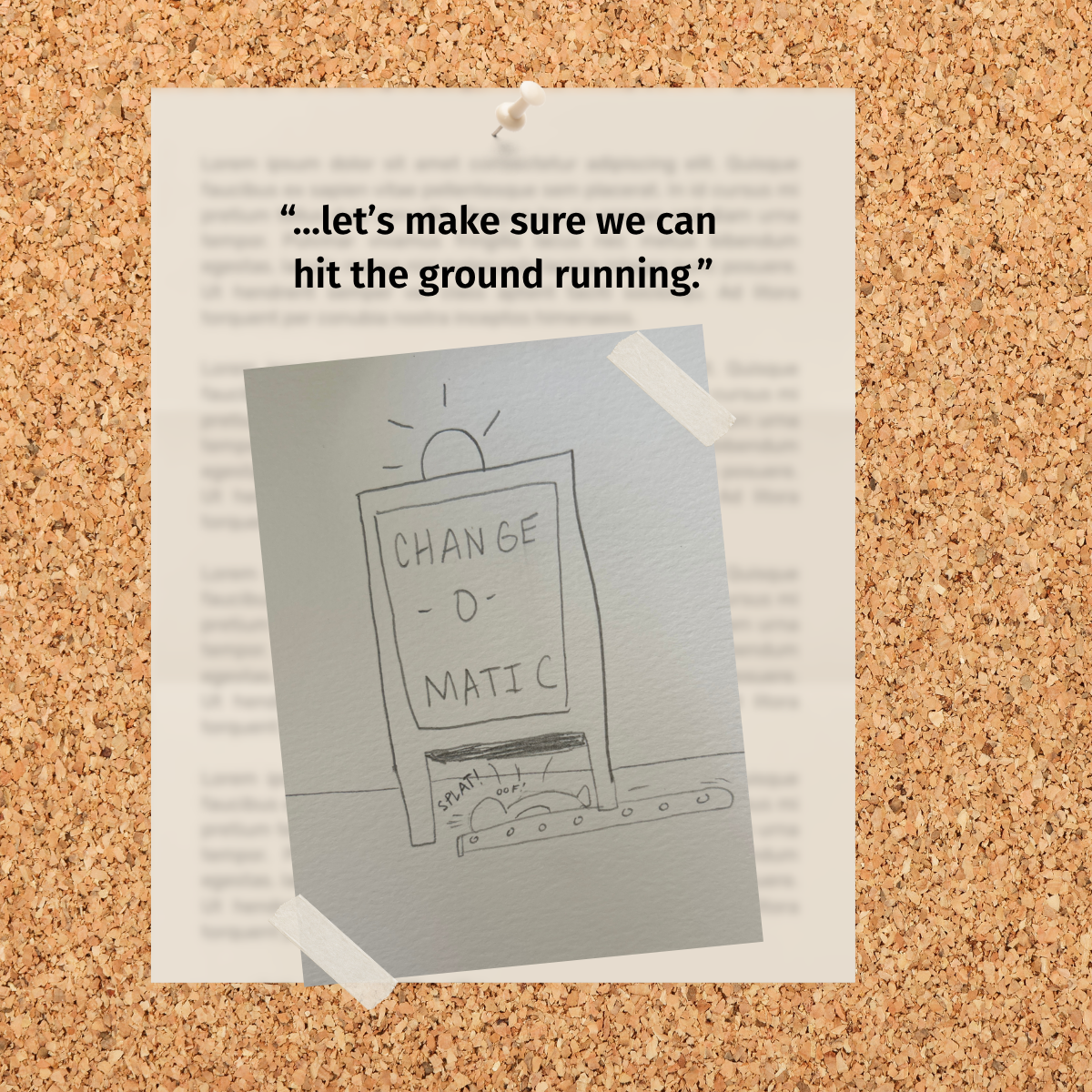
The pace of change isn't slowing, and we'll keep asking people to hit the ground running. But before anyone can run, they need to land on their feet and figure out which direction to go. Otherwise, there's a pretty good chance they'll just hit with a splat.
Give them a chance to understand what the change even means for them. Help them figure out where to step next.
We can't always give people more time. But we can do more with the time we have.